
High-precision motor controller and power supply compatible with Transrotor turntables: the alternative to the original Konstant supply.
Don't just power the motor. Measure the result.
Compatible with Transrotor turntables · Made to order · Delivered ready to use
Isostase is the system developed by Olydyne for high-end turntables: a single unit that combines a controller and a motor power supply. Real-time speed regulation, automatic motor balancing, and component condition monitoring: every function serves one goal, stable and precise playback, revolution after revolution.
An optical sensor reads the actual rotation of the platter, not that of the motor. The average speed is measured on every revolution.
The measured speed is compared with the target and the frequency is gently corrected (closed loop), instead of simply being imposed on the motor.
On two-motor turntables, the amplitude and phase of each motor are adjusted individually, and the balancing is checked by the built-in measurement.
Isostase is currently developed for Transrotor turntables, based on their published specifications. None of the models listed on the Compatibility page has been individually tested yet.
Isostase is delivered ready to use: the box contains the unit, the dedicated optical sensor (in its own housing, separate from the unit) and its target (an index disc to fix under the platter, or an index mark to stick on its edge, depending on the turntable), plus the matching cabling, mains cable included.
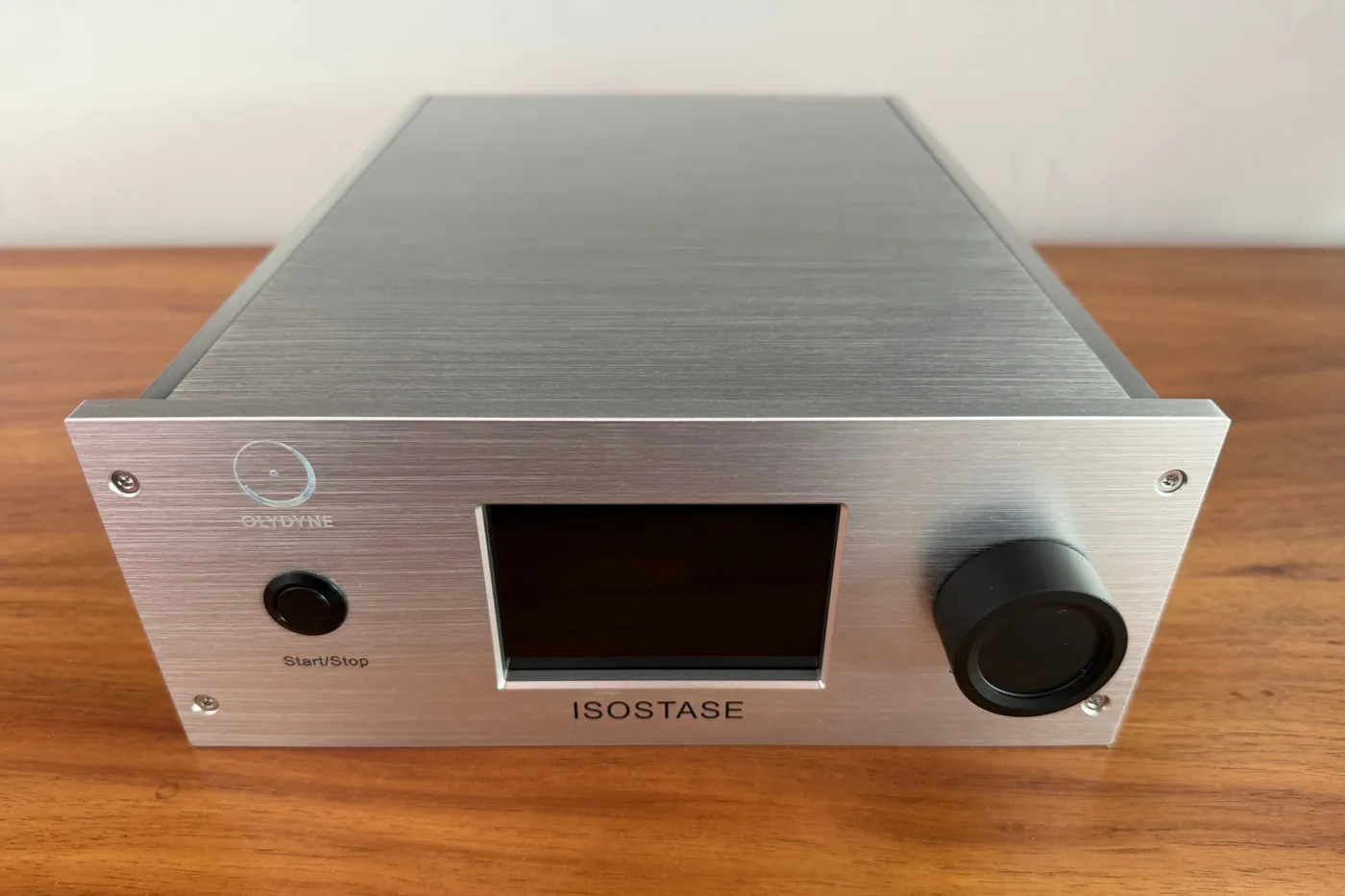
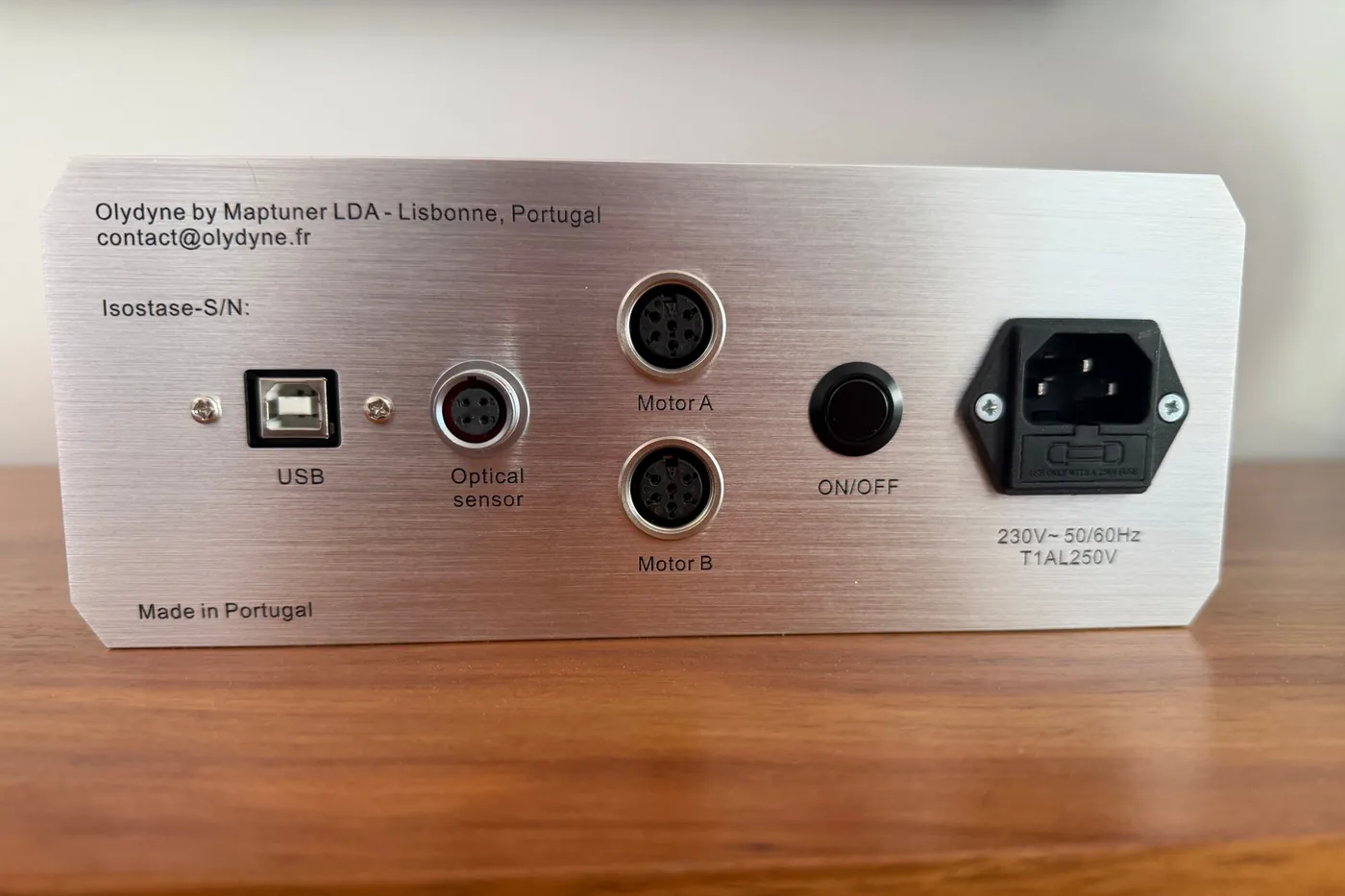
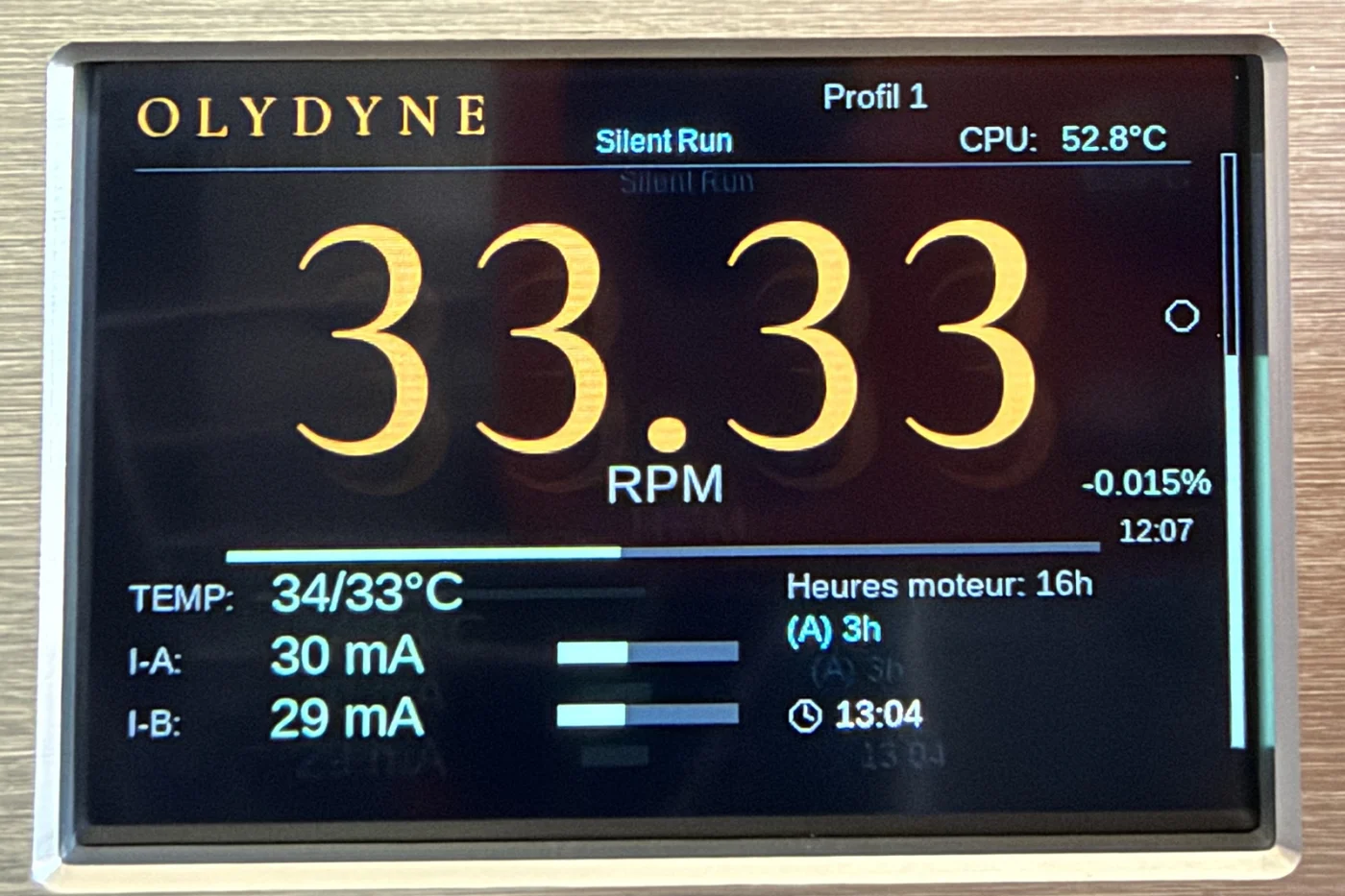
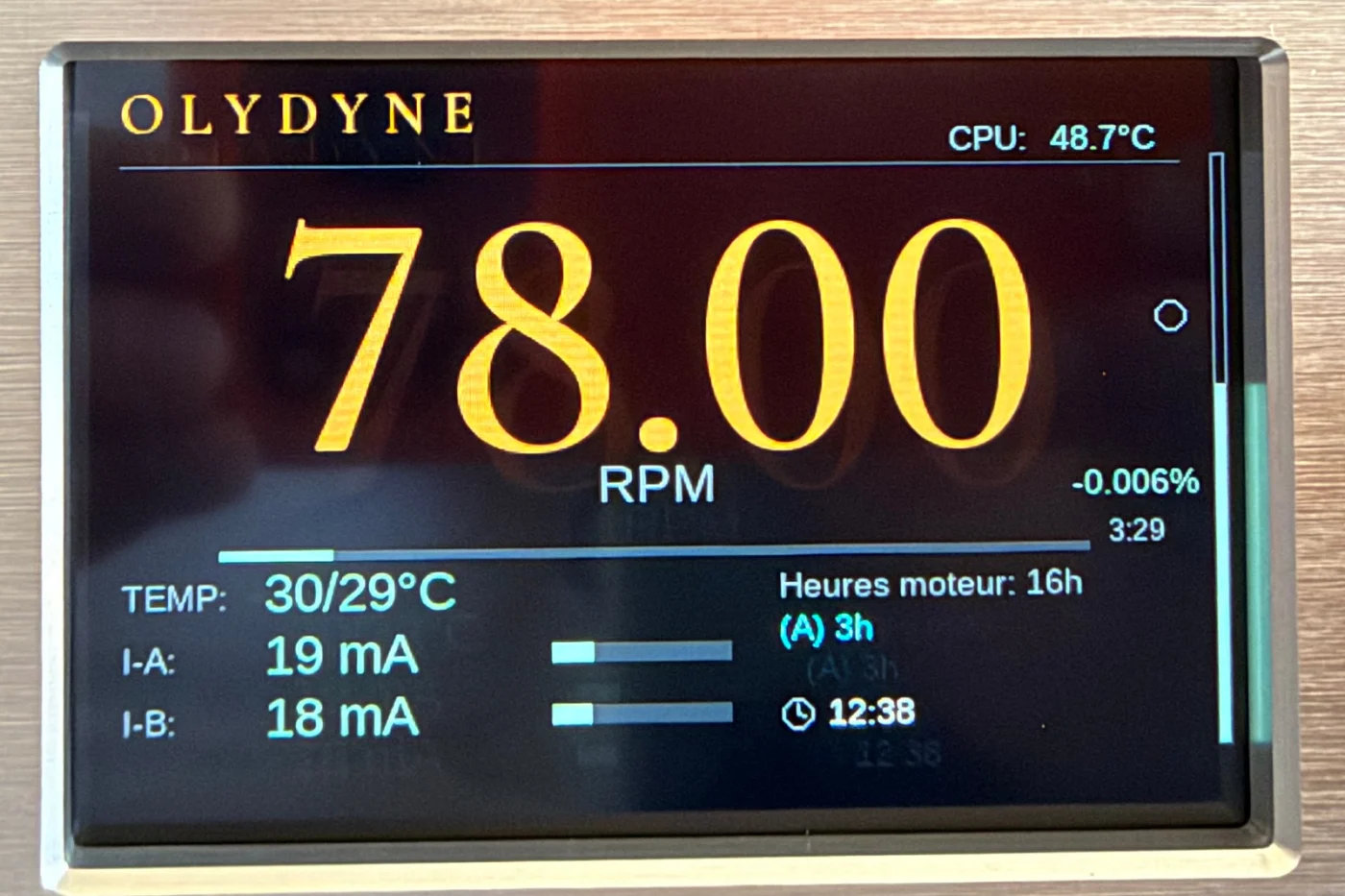
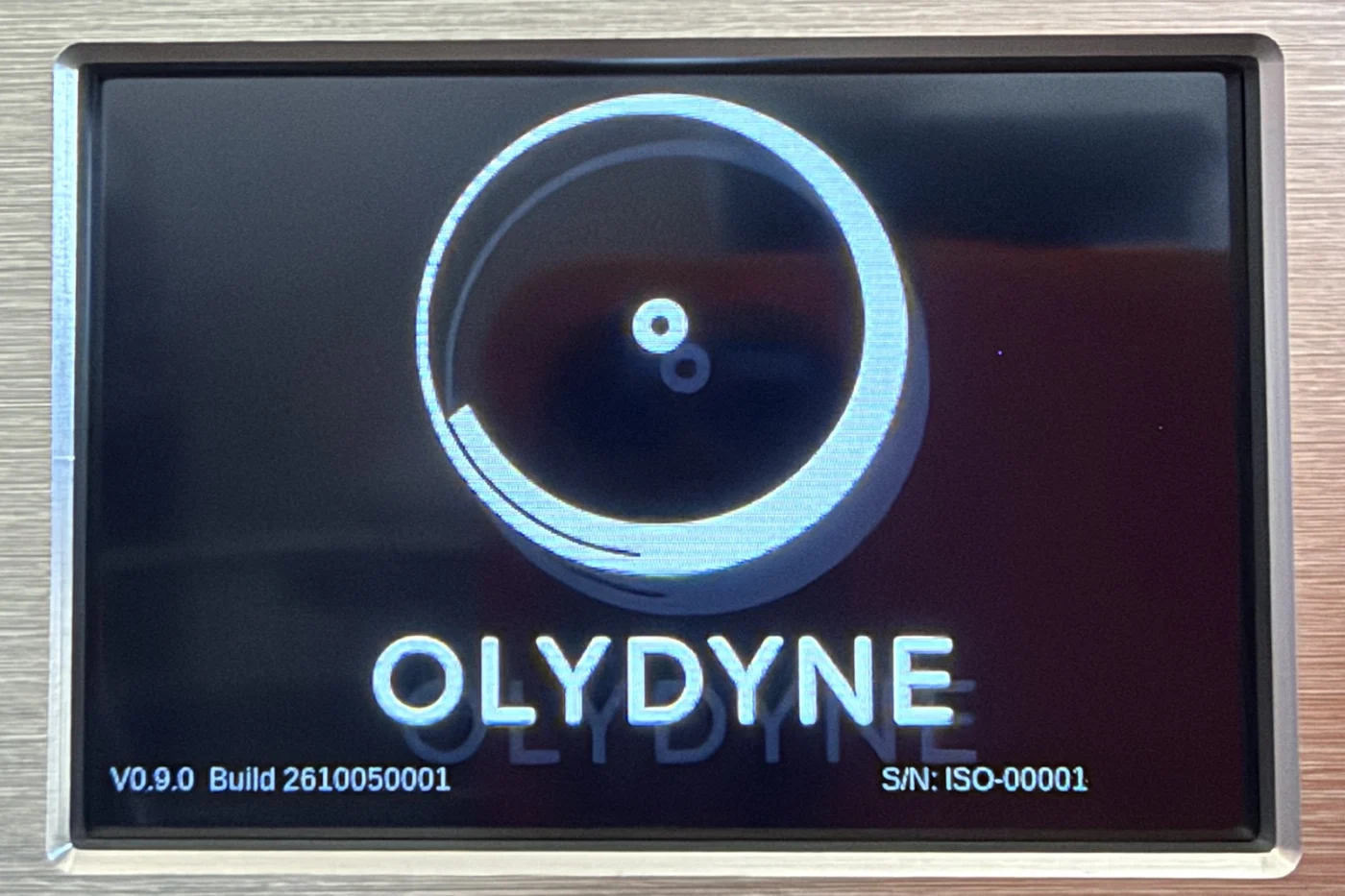
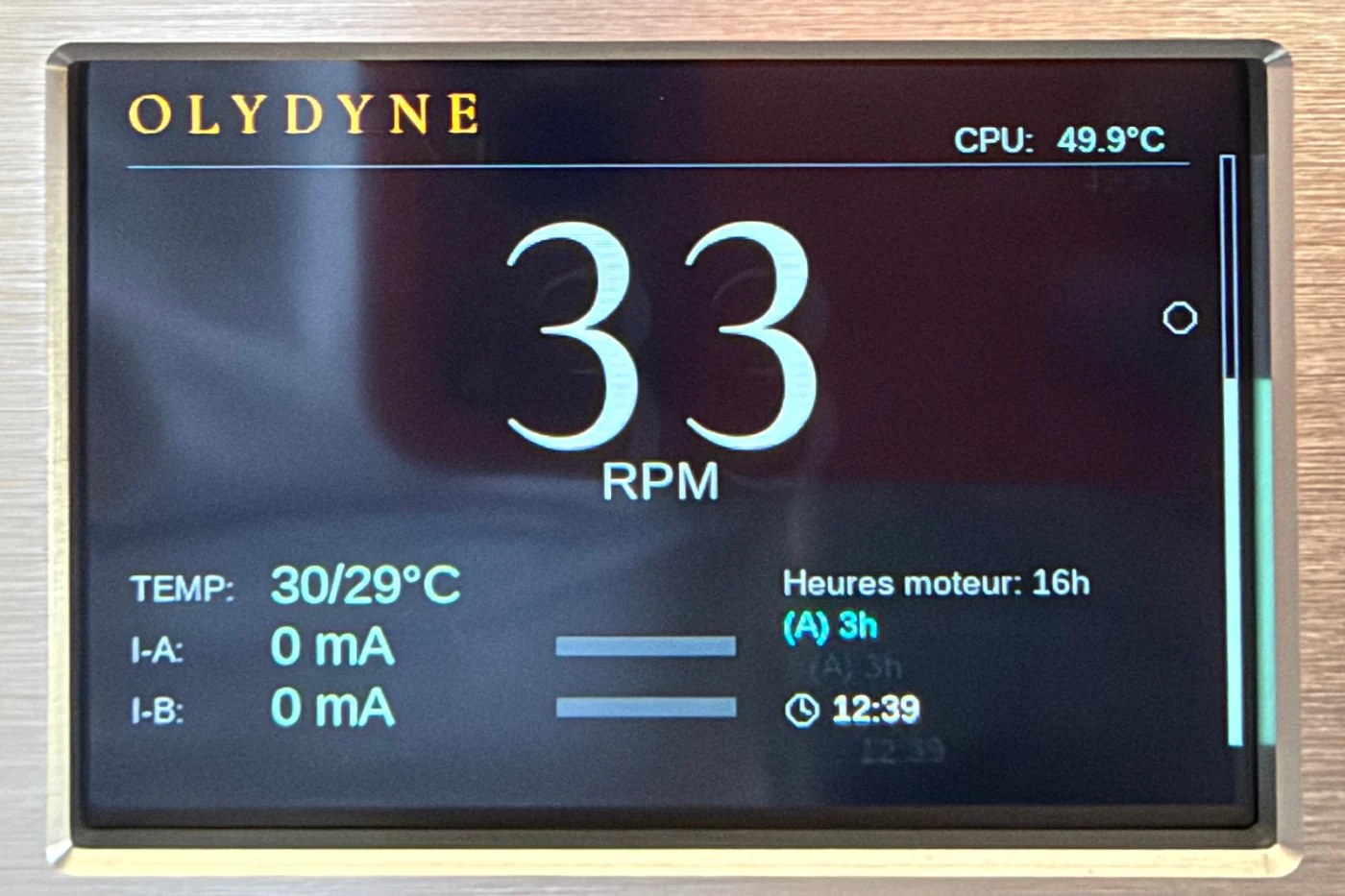
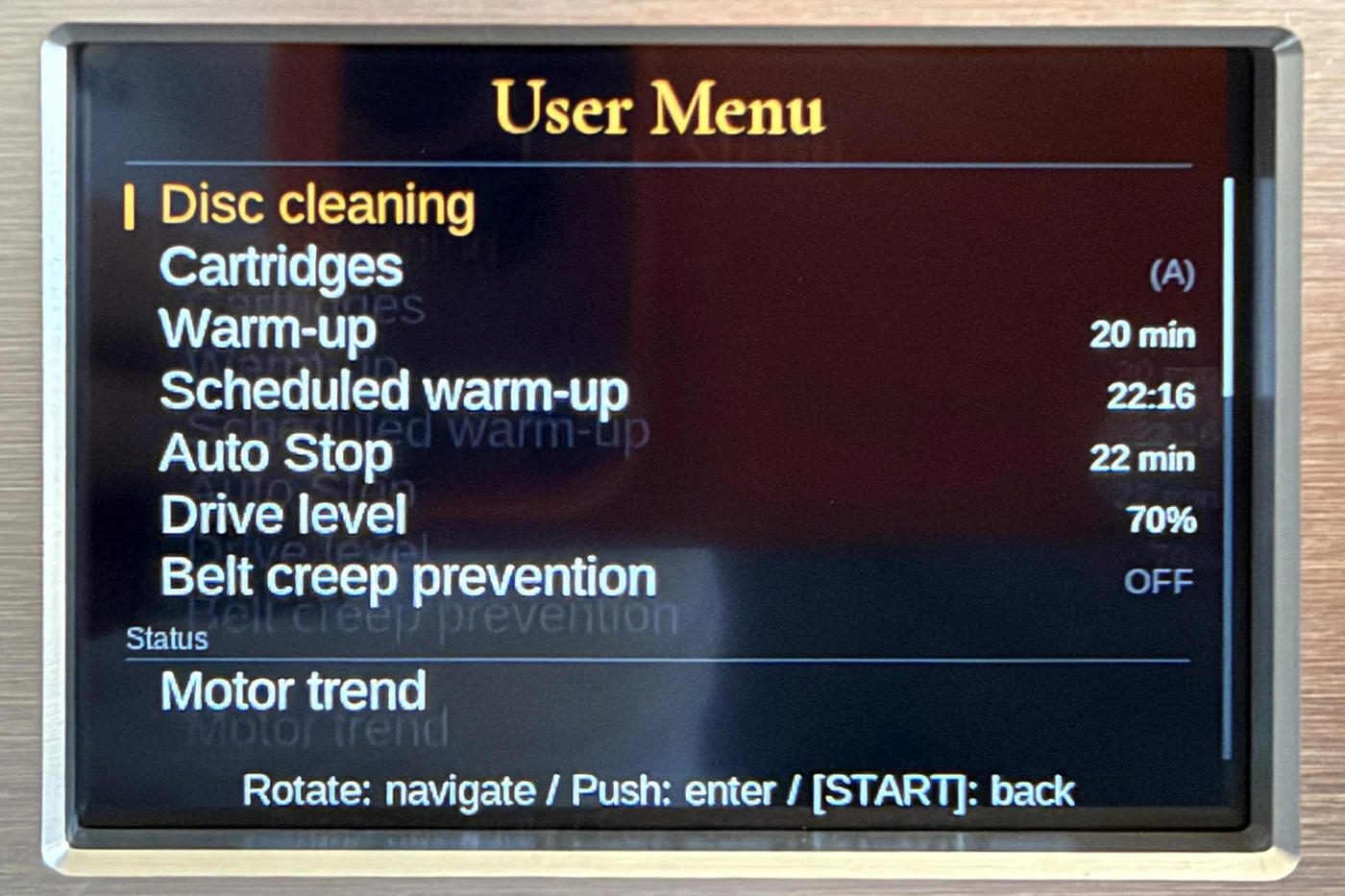
The display shows speed in large digits, with temperature, the current in each motor and running hours below. The rotary knob gives access to the menus. The menus are available in French, English, German, Portuguese, Spanish and Italian. The menu is shown here in English, the other screens in French.
Speed regulation, motor power supply, delivery and compatibility: all Isostase specifications are on the Specifications page.
Isostase is designed specifically to drive one or two Transrotor turntable motors with precision and stability, for long-term reliability.
It is designed to replace the original power supply on single- and dual-motor Transrotor turntables, meaning the entire Konstant range (Konstant EINS, Konstant M1 Reference…), and adds regulation, optimization, and diagnostic functions that the original power supply does not offer.
Even without the optical sensor, Isostase remains a complete motor power supply: factory-calibrated quartz reference, digital sine wave generated by a CD-quality audio DAC, gradual start and stop, frequency, amplitude and phase adjustable independently for each motor, two motor outputs as standard and current measurement on each motor. The optical sensor and closed-loop speed regulation are added on top.
Isostase can also be used as a measuring instrument: connected to its optical sensor, it displays the actual platter speed, averaged over several revolutions, and its deviation from 33, 45 or 78 rpm, even when the motor is powered by another supply, for example the original one. No regulation is applied in this mode.
Why the motor power supply matters for speed stability →
Dual-motor turntables: why synchronisation matters →
How to measure the speed of a turntable →
Isostase supports Transrotor turntables with one or two motors. The list of models and the current limits are on the Transrotor turntables compatible with Isostase page.
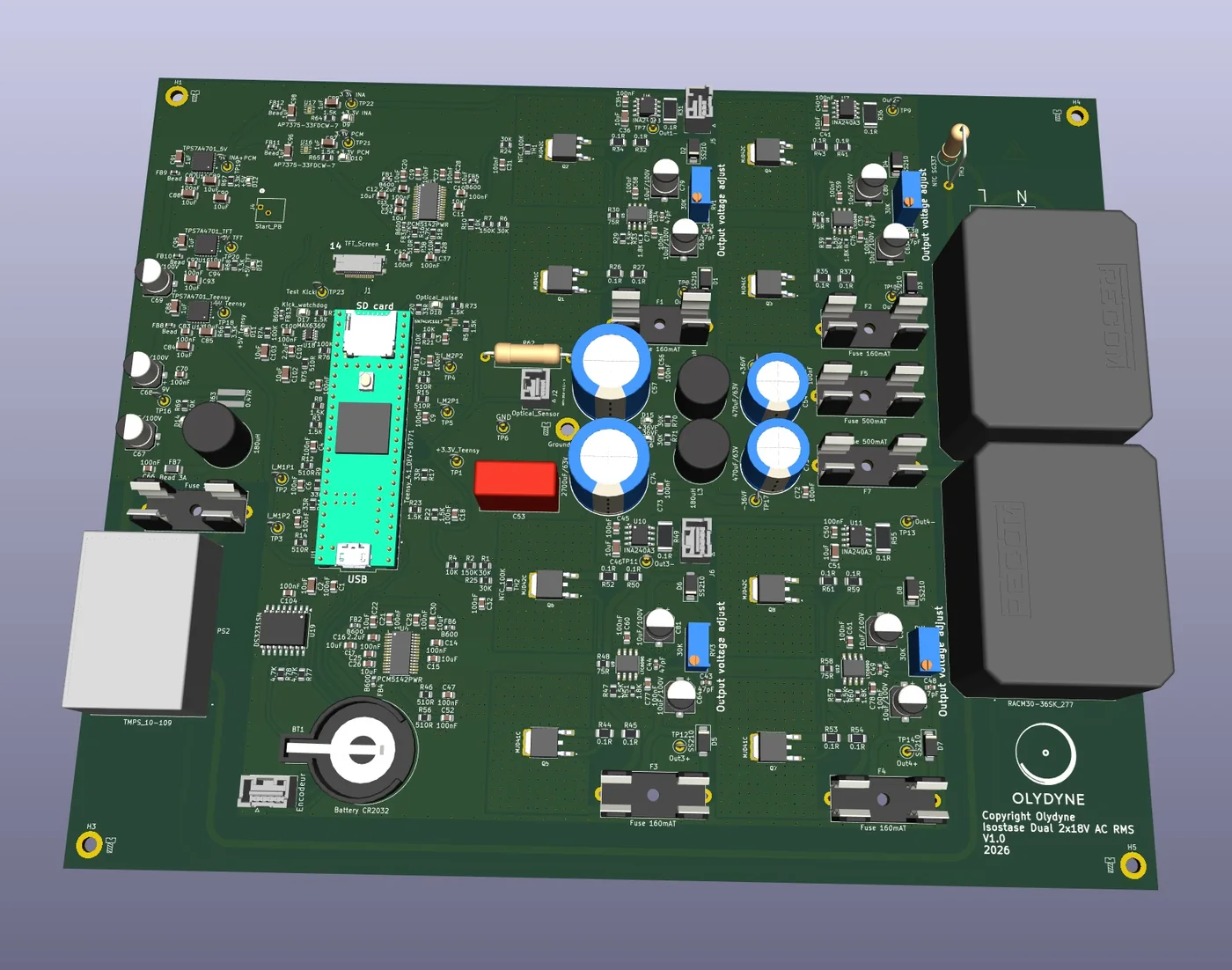
Isostase is built around an electronic board designed by Olydyne, currently at the pre-series stage (see the 3D render above). Here is what it contains, without going into component references.
A 600 MHz processor computes each motor's sine wave, converted by audio DACs; frequency, amplitude and phase are adjusted independently.
All frequencies derive from the microcontroller's crystal clock, individually calibrated at the factory on every unit.
A dedicated power stage amplifies each motor's sine wave independently. Able to deliver several amperes, it leaves ample current headroom to drive the motors precisely.
Each motor's current is measured continuously by a dedicated sensor; it is used for monitoring, motor balancing and FFT analysis.
A contactless optical sensor reads the actual rotation of the platter, not that of the motor.
Temperature probes on the heatsinks, thermal monitoring and an external hardware watchdog, which power-cycles the supply if the software hangs.
Crystal, DACs and supply voltage are individually calibrated at the factory; these values are kept through firmware updates.
This description presents the board's design, not measurements: Isostase is in the pre-series phase. First measurements are published in Speed, wow and flutter measurements of a Transrotor turntable; more will follow.
What defines Isostase: how the motors are driven, regulated and synchronised.
The motors are driven by Texas Instruments audio DACs working in CD quality (16-bit / 44.1 kHz). Each cycle of the sine wave is drawn with several hundred points, and its frequency, amplitude and phase can each be adjusted independently.
An optical sensor measures rotation on every platter revolution and corrects speed continuously, for constant pitch stability.
Speed accuracy calibrated against a quartz reference, with detection of long-term drift: if it exceeds a threshold, Isostase flags it (most often a sign of belt wear).
Automatically adjusts the drive level between motors (power balance), validated with a stability measurement to confirm the change actually helps.
Automatically finds and aligns the electrical timing between motors (angular synchronization), for the smoothest possible rotation on dual-motor setups.
Acceleration and deceleration ramps are adjusted according to the platter weight entered in the settings, protecting the motor and preventing belt slippage (and its premature wear), regardless of the Transrotor model.
Isostase measures what your turntable is really doing, and keeps a record.
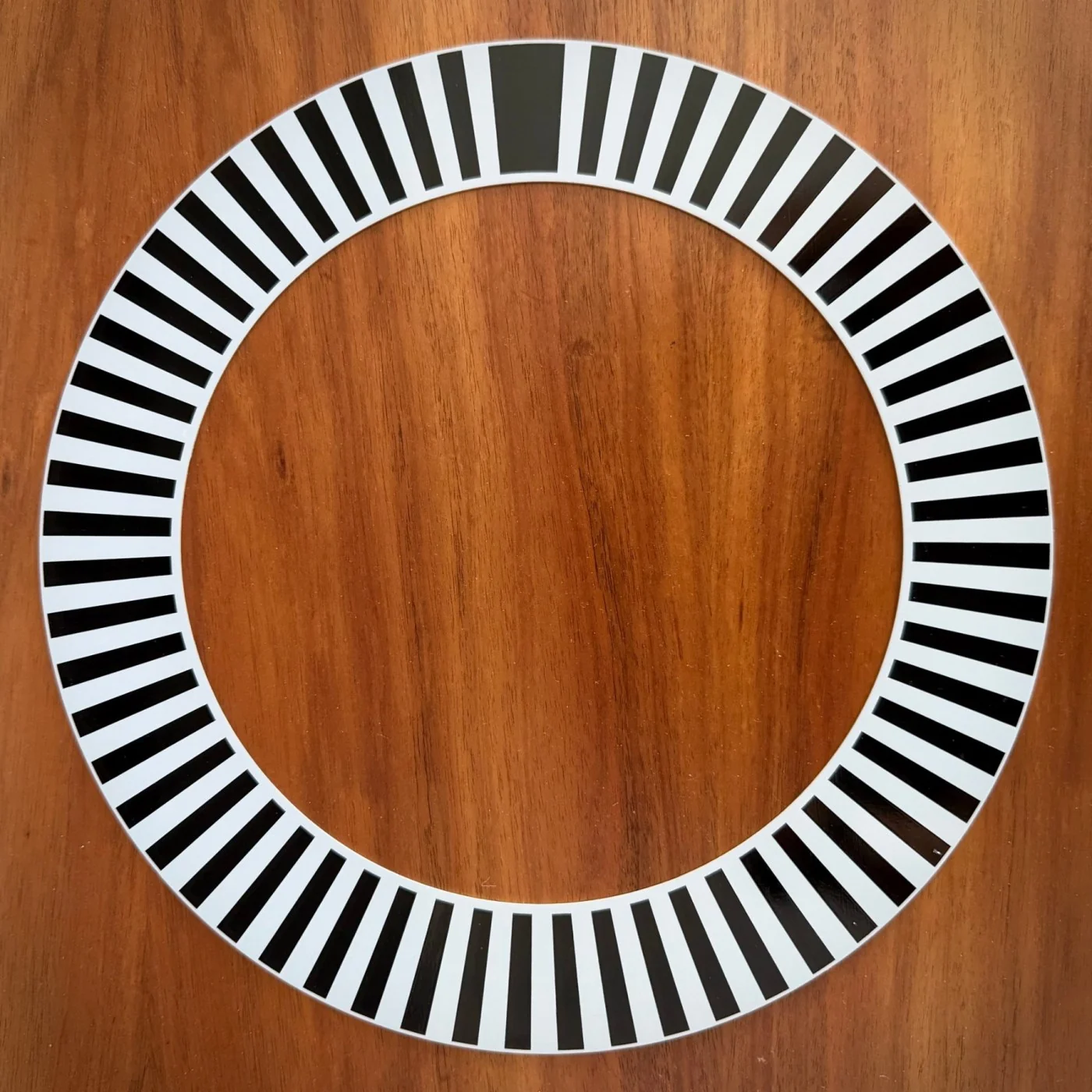
A real-time estimate of speed stability, shown directly on the controller. With a single mark per revolution, it compares one revolution with the next; with the index disc (under the platter, when there is room), it relies on 59 measurements per revolution, after calibration of the disc. Either way, this is not a Wow & Flutter measurement in the standardised (DIN/IEC) sense: it is a useful diagnostic indicator, not intended to replace a professionally calibrated measurement instrument.
After start-up or a speed change, an indicator shows when the speed has settled, so you know exactly when to lower the stylus.
Spectral (FFT) analysis of the motor current: harmonics and signature, with results archived for long-term trend tracking.
Every automatic decision made by the system (thresholds, triggers, outcomes) is logged for transparent diagnostics.
Continuous logging of key parameters (temperatures, currents, speed, voltages) and usage statistics (run hours, protection events) on the built-in SD card.
Usage and condition tracking for the stylus, belt and bearing, so maintenance comes at the right time.
By comparing the speed imposed on the motor with the platter's actual speed, Isostase measures belt slip and warns you when it increases, a sign that the belt is wearing or stretching.
Optional, off by default. If the platter has not turned for several days (adjustable from 1 to 30 days, 7 by default), Isostase spins it for 5 minutes. The part of the belt under tension changes from time to time, which can help prevent a crease from forming where it stays stretched in the same place. The unit has to stay powered (in standby). It does not start while you are using the controls, and the [START] key stops it at any time.
Isostase records your turntable's own signature (from the FFT analysis of the motor current), then flags any significant drift from it over time: a useful signal for bearing maintenance. It does not diagnose bearing wear directly; it detects changes from the turntable's established signature that may indicate a mechanical change.
Stylus usage-time tracking. Up to 15 phono cartridges can be kept in memory at the same time.
Isostase reminds you of routine maintenance: bearing oil, belt replacement and stylus, based on how much the turntable is actually used.
A single overview screen brings together belt and bearing condition, motor current, speed stability and upcoming maintenance.
Convenience, safety and everyday details.
The turntable stops itself after an adjustable duration, with speed-specific limits. If forgotten at the end of a side, it won't leave the stylus spinning endlessly in the run-out groove: less needless wear on the cartridge, the record and the motor.
Switching to 78 RPM is handled electronically, with no need to move the belt to a different pulley step.
Fine speed adjustment, shown as a percentage and in semitones, stored separately for each speed and each user profile.
A dedicated cycle for record cleaning, and a reduced-amplitude playback mode for quieter operation.
A multi-step break-in cycle for new components, with on-screen progress tracking.
Runs the motor before listening, adjustable duration, and can start on its own at a time of your choice: the turntable is ready when you are. The classic audiophile ritual, automated.
Clear graphical interface, available in French, English, German, Spanish, Portuguese, and Italian.
The screen can switch off during listening so it doesn't disturb in a dimly lit room, and show the time when the turntable is idle, as the user prefers. The time is kept by a real-time clock with a temperature-compensated crystal, independent of the main processor and backed by a battery: drift specified by the manufacturer at ±2 ppm between 0 and 40 °C, in the order of one minute per year.
A large-digit mode shows speed and stability, readable from your listening chair.
A code can lock the menus, for showroom or family use without any risk of accidental changes.
Profiles, phono cartridges and motor settings can be backed up to the SD card and restored just as easily, for example after a reset or a turntable change.
The firmware is updated through an external USB connector, without losing your settings: your profiles and preferences are kept, and the factory calibrations specific to each unit (quartz reference, audio converters, supply voltages) are stored separately and preserved.
Multi-sensor monitoring (processor, power supply heatsinks) with progressive power reduction under heat, protecting the power electronics.
Hardware and software watchdog monitoring for reliable long-term operation.
Indicative price
€1,990 approx., incl. VAT
Complete unit, delivered ready to use with matching sensor and cabling, two motor outputs as standard. Price may change before launch. Made to order.
Yes. For single- and dual-motor turntables, Isostase, replaces the entire range of Transrotor Konstant motor power supplies, including the Konstant EINS and the Konstant M1 Reference. It adds speed regulation, phase optimization, and diagnostic functions not found on a standard power supply.
The indicative price of Isostase is approximately €1,990 including VAT, for a complete unit, delivered ready to use with matching sensor and cabling, with two motor outputs as standard. This price may change before launch. Isostase is made to order.
No. Isostase simply replaces the original Transrotor power supply, nothing more: the motor is not modified. Only a target is fitted under the platter (an index disc, fixed with double-sided adhesive) or, depending on the turntable, an index mark is stuck on its edge, so that the optical sensor can measure its rotation.
The Isostase unit, the dedicated optical sensor (in its own housing, separate from the unit), its target (an index disc to fix under the platter, or an index mark to stick on its edge, depending on the turntable), and the matching cabling, mains cable included. The unit is delivered ready to use.
The optical sensor is supplied in its own housing. It sits under the platter when there is room (the most discreet arrangement), with an index disc fixed under the platter, or beside the platter, with an index mark stuck on its edge. The choice depends on the free height between the underside of the platter and the chassis and on the distance to the base, which vary from model to model. Olydyne adapts the housing to each turntable from dimensions sent by owners: send your turntable's dimensions.
Isostase is compatible with the Transrotor Jupiter, Avorio, Rossini, Dark Star / Dark Star Reference, Zet 1 and Zet 3, Leonardo, Fat Bob / Fat Bob S, Rondino FMD, Massimo / Massimo Nero, Max, Alto and Bellini, in their single- or dual-motor versions. Three-motor turntables (such as the Artus FMD, Metropolis FMD, Orion Reference TMD, Strato, Tourbillon FMD and Ascanio FMD) are not currently supported. For any other model, contact us to check compatibility.
Isostase combines real-time speed regulation via optical sensor, automatic motor phase optimization, turntable condition monitoring, and SD card data logging, features the original power supply does not offer.
No. Isostase is a product developed by Maptuner LDA under the Olydyne brand, compatible with Transrotor turntables, with no affiliation, partnership, or official endorsement from the Transrotor brand.
Isostase is being finalised and pre-series units of the electronic board are currently being measured and validated. Launch is planned for late 2026 or early 2027 (indicative schedule, subject to change). Leave your email to be informed when orders open.
Thank you! Your registration has been recorded. A confirmation email is being sent to you; your address is used only to notify you of the launch.
The registration could not be completed. Please check your email address and the consent box, then try again, or write to us directly.
A question? Write to us:
contact@olydyne.fr